
Global mobility COMPLIANCE
Travel to Vietnam safely and compliantly
Planning a workation, a business trip or assignment to Hanoi? Learn the essential information you and your employees need to work safely and compliantly while traveling in Vietnam, including working conditions, safety and health regulations, tax treaties, social security, and more.


Download Compliance Guide for Vietam
As an employer, there are many things you need to consider before sending an employee abroad. A handy PDF downloadable for free.
What you can expect
Capital city
Hanoi
Telephone code
+84
Official language
Vietnamese
Currency
Vietnamese Dong (VND)
Time zone
Indochina Time (ICT, UTC+7)
Visa
To work legally while in another country, employees generally need a valid work title. It's important to keep in mind that the consequences of entering without the proper documentation can be significant for both the employee and the employer.
For those planning an assignment, business trip or work-from-anywhere trips to Vietnam, here's a quick overview:
MUST-KNOW for Assignment in Vietnam:
- Foreign Worker Categories: Under Decree 152/2020/ND-CP (as amended by Decree 70/2023), foreign workers fall into five categories — Manager, Executive, Expert, Technical Worker, or Intra-Company Transferee. Each has distinct eligibility criteria around qualifications and prior experience.
- Prior Demand Approval: The host employer must justify the foreign hire and obtain MOLISA/DOLISA approval at least 30 days before recruitment. This pre-step is a common bottleneck — start early.
- Document Legalisation: All supporting documents (degree, criminal record, employment confirmation) must be apostilled or consular-legalised AND translated into Vietnamese. Plan 4–6 weeks for this alone.
- Medical Examination: Mandatory for the work permit application; must be completed at a hospital recognised by the Vietnamese Ministry of Health.
- Temporary Residence Registration: All foreign nationals must register their address with the local public security office (Công an) within 12 hours of arrival. Hotels handle this automatically; for private accommodation, the host or employer is responsible.
- Province-Level Rules: Work permits are issued by provincial DOLISA offices — processing times and document requirements can vary meaningfully between Hanoi, Ho Chi Minh City, Da Nang, and other provinces.
Short Term Assignment: (Employer Sponsorship required)
- M Visa (Business Visa): Suitable for short-term commercial activities such as business meetings, negotiations, and inspections; typically granted for stays of 30–60 days.
- Visa-Free Entry: Citizens of 38 nationalities benefit from 30-day visa-free access as of early 2025, this does not permit paid work or project delivery.
Long-Term Assignment: (Employer Sponsorship required)
Typical Processing Time: 2-4 months end-to-end
- LD1 / LD2 Visa (Work Visa): Required for all foreign nationals taking up local employment in Vietnam; issued after Work Permit (or exemption) is approved. LD1 = work-permit-exempt; LD2 = work-permit-required.
- Work Permit: Issued by the provincial DOLISA under Decree 152/2020/ND-CP (as amended by Decree 70/2023); valid up to 2 years and extendable once for another 2 years. Categories: Manager, Executive, Expert, Technical Worker, Intra-Company Transferee.
- Temporary Residence Card (TRC): Must be obtained after entry on the LD visa; combines the right to reside and work in Vietnam into a single document, issued for the duration of the Work Permit (max 2 years).
Business trips:
- E-Visa (up to 90 days): Required for business activities for most nationalities
- DN1 / DN2 Business Visa: Required when activities are sponsored by a Vietnamese host entity beyond the e-visa scope
- Visa-Free Entry: Available for eligible nationalities (45 days)
- Multiple Entry Options: Available under both the e-visa and DN1/DN2
Need trip-specific visa information? Reach out WorkFlex Visa services.
Work-from-anywhere trips:
- E-Visa: Suitable for most short-term remote work (up to 90 days)
- Visa-Free Entry: Suitable for eligible nationalities (up to 45 days)
- DN1 / DN2 Business Visa: Not appropriate without a Vietnamese sponsoring entity
- Tourist Visa (DL): Not suitable for any work activities
- Digital Nomad Visa: Vietnam does not currently offer a specific digital nomad visa program
Need trip-specific visa information? Reach out WorkFlex Visa services.
Working hours
Most employees in Vietnam work from Monday to Friday, with a standard workweek of around 40 hours (the legal maximum is 48 hours per week). The typical workday usually starts between 8:00 AM and 8:30 AM and ends between 5:00 PM and 5:30 PM, including a lunch break of about 1 to 1.5 hours — many offices observe a midday rest period right after lunch.
To remain compliant during your trip abroad, here are some suggestions to follow:
- Avoid working overtime: Regulations regarding overtime can differ significantly and may be much stricter compared to those in your home country.
- Refrain from working outside regular hours: The rules surrounding working outside regular hours may vary and could be stricter than in your home country.
- Do not work on weekends: If the weekend days differ from those in your home country, please avoid working on both your regular weekend days and the local weekend days.
Public holidays
Get information about specific public holiday dates for this year here.
- January 1: New Year's Day
- Late January – Mid February: Tết (Lunar New Year) — 5-day holiday (date varies annually)
- Late March – Late April: Hung Kings' Commemoration Day — 10th day of the 3rd lunar month (date varies annually)
- April 30: Reunification Day
- May 1: International Labour Day
- September 2: National Day — observed over 2 days (the day before or after is also a public holiday)
Depending on the region you're visiting, there may be additional region-specific public holidays. For more information about these holidays, please check here.
To comply with labor laws, please refrain from working on national or regional holidays during your trip. These days hold significant importance for locals and provide a great opportunity for you to blend in and celebrate with the community.
Social security compliance
When working remotely abroad, your employees may become subject to the social security scheme of the destination country, which means you, as an employer, would need to pay social security premiums accordingly. Vietnam has signed only a limited number of bilateral social security agreements (currently with the Republic of Korea, with Japan negotiated) — most home countries, including Germany, the UK, and the US, do not have a treaty in place. As a result, foreign employees on extended stays are generally subject to mandatory Vietnamese social insurance contributions under Decree 143/2018/ND-CP, with limited exceptions (notably intra-company transferees).
To ensure your employees remain compliant where a treaty does apply, they must possess a valid Certificate of Coverage (CoC) obtained from the relevant home-country authorities. For WorkFlex users, the CoC is issued automatically after a trip request is submitted. Discover our solution for efficient social security risk mitigation here.
Tax compliance
Vietnam has signed bilateral tax treaties with more than 80 jurisdictions that specify the steps to take to avoid double taxation, available here. These treaties generally follow international standards and provide guidelines for various types of income, including employment income.
Despite the existence of many tax treaties, the issue of Permanent Establishment remains a significant compliance concern for employers with employees temporarily working in Vietnam, whether for a workation or a business trip. If a traveling employee is deemed to constitute a Permanent Establishment in the destination country, the employer may be required to register the company locally, allocate profits to the local business (branch), and file corporate taxes, leading to substantial administrative burdens. Vietnam additionally applies a Foreign Contractor Tax regime (Circular 103/2014/TT-BTC) to certain cross-border service charges.
To avoid this scenario, here are some key strategies:
If your employees are traveling for a workation, they should refrain from negotiating or signing sales contracts during the trip. Additionally, they should avoid visiting clients or any office, including the employer's local office in the destination country. Following these guidelines will help mitigate the important compliance risk for the employer related to permanent establishment.
If your employees travel for business, it may be impossible to refrain from the activities above. In this case, please make sure to inform your (tax) compliance department of this matter. If you and your organization are a WorkFlex user, this topic is covered through the WorkFlex platform.
Overriding local employment provisions
Employees traveling to Vietnam are expected to comply with some basic local employment provisions that may be qualified as overriding, such as regional minimum wage standards (Vietnam sets four regional rates under Decree 293/2025/ND-CP, effective 1 January 2026), statutory working time and overtime caps, and paid public holidays. See the recent information on minimum wage in Vietnam here.
Local emergency phone
113 (Police), 114 (Fire), 115 (Ambulance)
Vaccination
Guidelines
Drinking potable water
Not recommended
Travel health insurance
When traveling to Vietnam for work — whether for a short business trip or an extended workation — it's essential to have comprehensive health insurance coverage to ensure access to medical care. Public hospitals are below Western standards, and serious cases are routinely evacuated to Bangkok or Singapore at significant cost.
For business trips, the employer typically arranges the employee's travel health insurance. However, for workations, these responsibilities can be less clear. WorkFlex takes care of travel health insurance for trips worldwide to ensure there are no costly consequences for either the employee or the employer if accidents occur while working abroad.
For travelers using WorkFlex
If you’re traveling with WorkFlex, comprehensive health insurance is automatically included if your employer has activated this feature. For more details, please refer to your trip request on the WorkFlex platform.
For other travelers
Ensure you have travel health insurance with worldwide coverage, whether for a workation or business trip, so that you can receive adequate medical treatment in case of an emergency. For Vietnam specifically, we recommend a policy with at least USD 50,000 medical coverage plus emergency evacuation, given that complex cases are typically transferred to Bangkok or Singapore.
Urgent safety information
For travelers using WorkFlex:
Please refer to your trip's risk assessment under the "Health and Security" dimension to review any urgent security information relevant to your travel.
For other travelers:
Please visit official authority websites to check for any current threats or urgent security advisories:
Domestic Political Situation
Sensitive Regions
Some areas warrant additional awareness:
- Border zones (with China, Laos, Cambodia): Restricted areas in places; permits may be required for hiking or remote travel.
- Central Highlands (Tây Nguyên): Historically sensitive due to ethnic-minority unrest; some areas require travel permits or local registration.
- Military and government installations: Photography is prohibited; signage may not be in English.
Precautions:
- Avoid photographing police, military personnel, government buildings, or border installations.
- Do not engage in or document public protests — gatherings are illegal without authorisation and foreign participants risk detention or deportation.
- Be mindful of political conversations, including on social media; the Cybersecurity Law 2018 criminalises certain online content critical of the state.
Nationwide
- Demonstrations: Public protests are illegal without government approval; participation can result in detention, deportation, or criminal charges.
- Internet & device monitoring: Authorities may review content stored or consulted on electronic devices. Western services such as Google, Facebook, WhatsApp, Instagram, and LinkedIn are generally accessible — unlike in China — but online activity is monitored, and the Cybersecurity Law requires certain data to be stored locally. Some news sites and a small number of VPN providers may be intermittently blocked.
- Surveillance: Foreign nationals — particularly those engaged in journalism, NGO work, or activities deemed politically sensitive — should assume their communications and movements may be observed.
Crime
Vietnam's overall crime rate is low and violent crime against foreigners is rare, but petty crimes such as pickpocketing, bag-snatching, and scams are commonly reported:
- Motorbike-borne bag-snatching is the most prevalent risk in tourist areas and major cities — riders snatch phones and bags from pedestrians or open vehicle windows. Petty theft increases noticeably during the Christmas and Tết seasons.
- Drink spiking and methanol poisoning have been reported in nightlife districts, sometimes in licensed bars and hotels — counterfeit alcohol containing methanol has caused serious illness and deaths.
- Unlicensed taxi scams: inflated fares, rigged meters, and in some cases sexual-assault and theft incidents linked to unmarked vehicles.
- Phone and online scams impersonating police, banks, or delivery services are common; job scams in the Mekong region have trafficked victims to neighbouring countries for forced work in online scam compounds
Safety Tips:
- Secure money, IDs, and essential documents. Keep digital backups and a passport photocopy separate from the original.
- Always carry your passport (or a clear photocopy) with a valid visa or e-visa printout.
- Use licensed ride-hailing apps such as Grab or XanhSM; avoid hailing unmarked taxis, especially at night.
- Carry bags on the side away from the kerb; keep your phone secure when crossing streets to deter motorbike snatchers.
- Stay vigilant in crowded spaces such as airports, train stations, and tourist nightlife zones (e.g. Bùi Viện Walking Street in HCMC).
- Prefer sealed, branded alcoholic drinks; avoid free-pour spirits and never leave drinks unattended.
- Be cautious of unsolicited emails, phone calls, or messages asking for personal information or payment. Verify authenticity or contact the police (113) if in doubt.
- Be sceptical of unsolicited employment offers — particularly those promising work in Cambodia, Laos, or Myanmar.
USE CASES
What assignments can you cover with the WorkFlex solution?
From Europe to Asia, Americas to Africa - WorkFlex handles compliance complexity for any country combination worldwide, covering all your international secondment scenarios
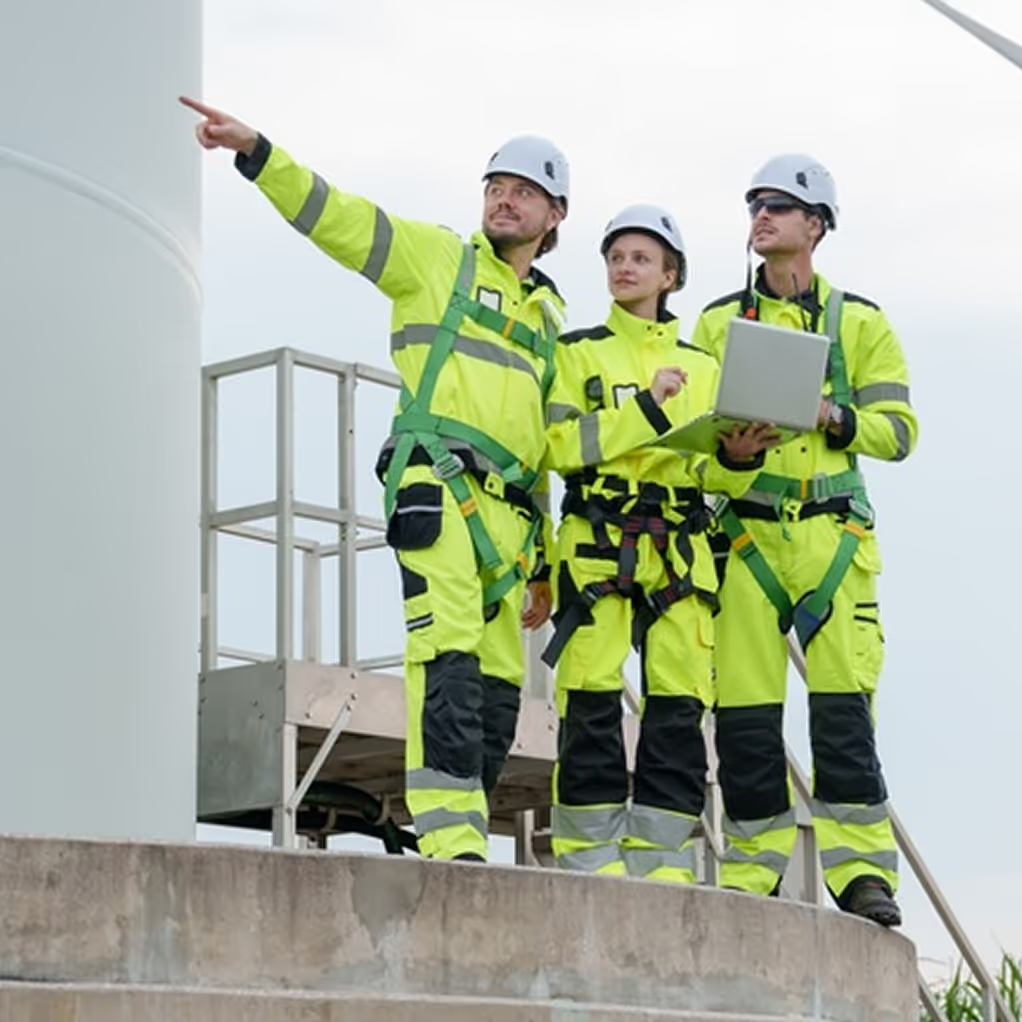
Long-term strategic deployments lasting 1-3 years to establish new entities, fill key management roles, or transfer critical expertise to international markets

Structured programs where employees work temporarily with partner organizations, subsidiaries, or different departments to share knowledge, develop skills, and build cross-cultural competency

Deployment of specialized teams to execute international projects, like system implementations, market launches, or technical installations. Often takes place in groups, requiring coordination of multiple compliance requirements simultaneously
Solution
Transform your approach to international assignments with WorkFlex
International assignments shouldn't overwhelm your HR team. Let WorkFlex automate the complexity
Get information about specific public holiday dates for this year here.
- Complete overview of your staff assignments in just a few minutes
- Replace Excel chaos with standardised automation
- Reduce costly reliance on consultants
- Gain complete transparency over all assignments
Depending on the region you're visiting, there may be additional region-specific public holidays. For more information about these holidays, please check here.
Hundreds of companies trust WorkFlex to handle business travel compliance





FEATURES
End-to-end assignment management across every phase
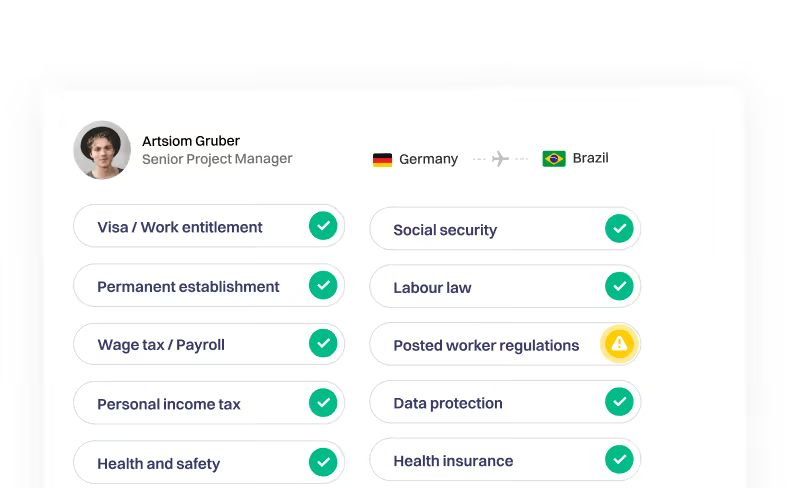
Assignment compliance assessment
Get instant evaluation of all 10 risk dimensions - visa, permanent establishment, wage tax/payroll, personal income tax, social security, labour law, posted worker regulations, data protection, health & safety, health insurance
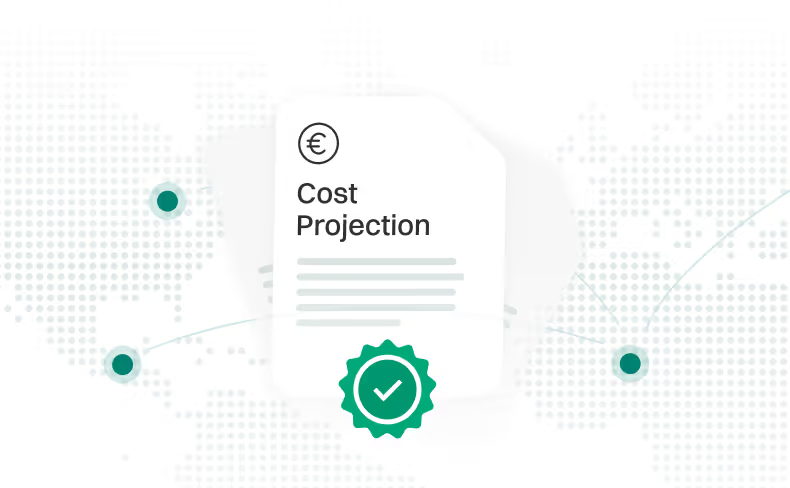
Cost projection & Balance sheet
AI-powered cost calculations with real-time benchmarks for taxes, allowances, insurance, benefits, and relocation costs - no more expensive index data
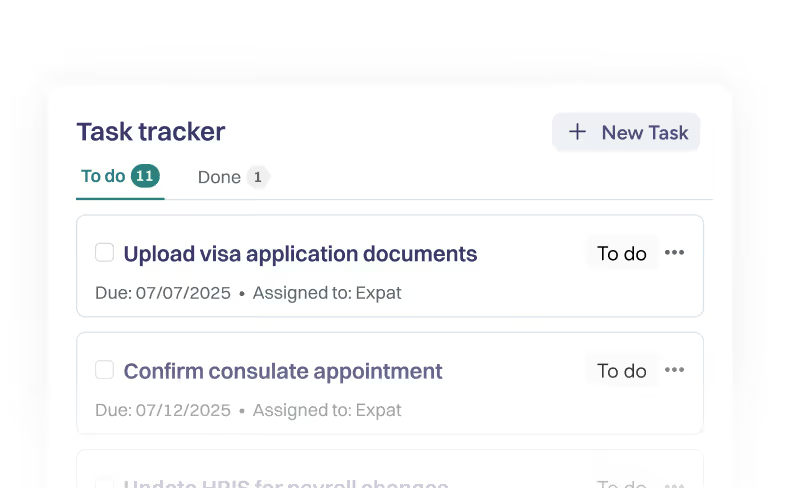
HR task tracker
Step-by-step guidance on country-specific compliance requirements, pre-assessment tasks, and arrival procedures tailored to your assignment type
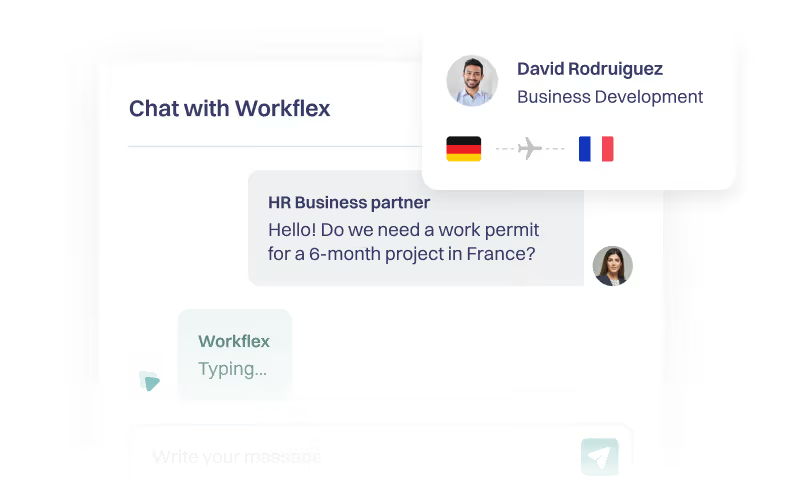
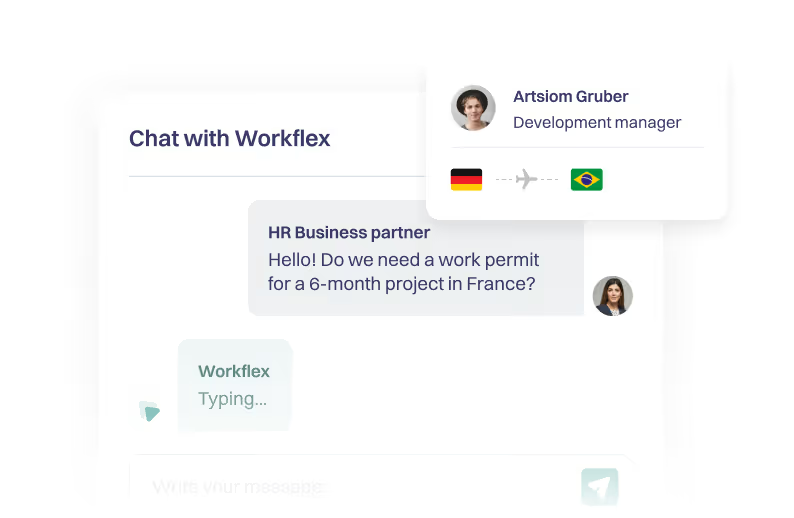
Assignment exploration chat
Unlimited compliance questions to human experts - explore scenarios and refine your assignment plan without consultant fees
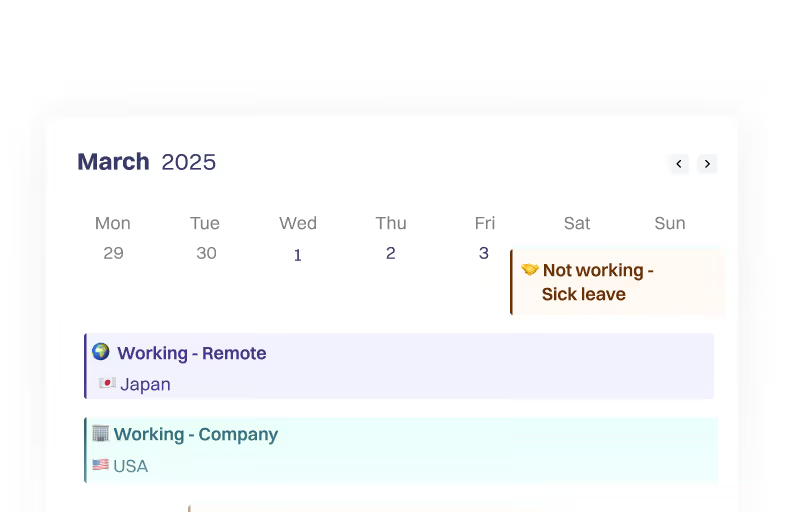
Travel calendar & Compliance tracking
Monitor business trips, workations, and time off during assignments for seamless tax reporting and PE risk management
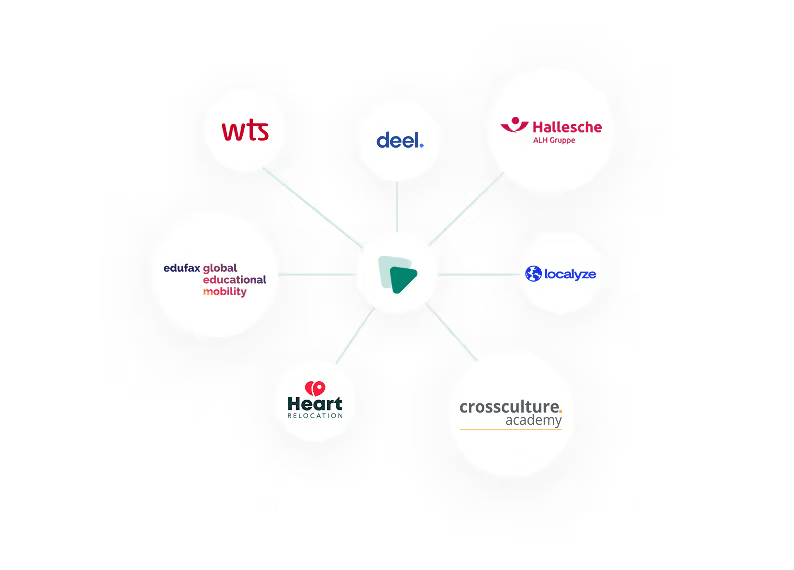
Vendor platform
Benefit from trusted partners for work permits, taxes, relocation, and insurance - all with access to complete assignment information throughout the assignment
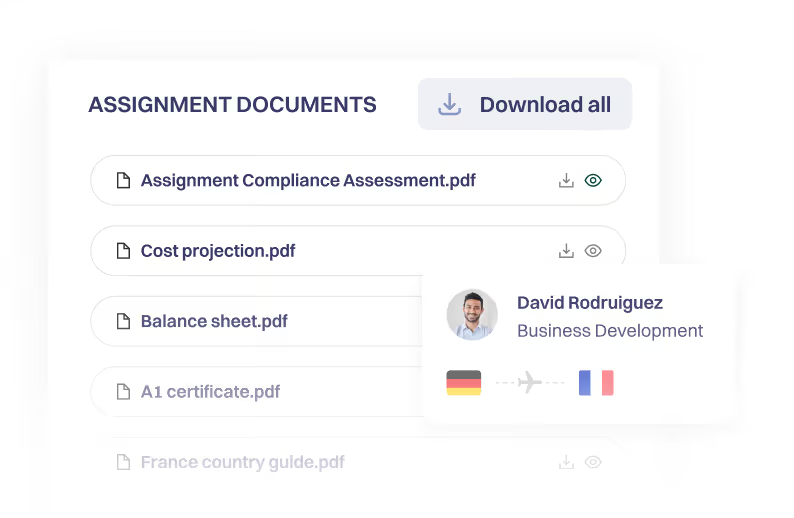
Document repository
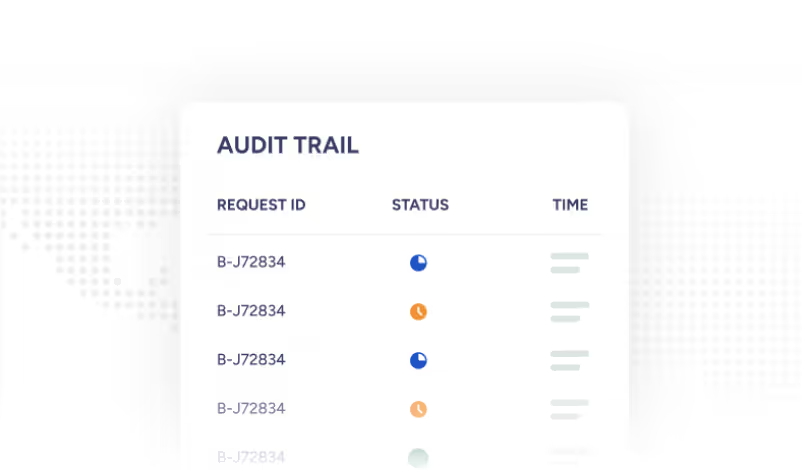
Centralized, secure storage for all assignment-related documents from A1 certificates to balance sheets with audit-ready organization
Real-time risk alerts and monitoring
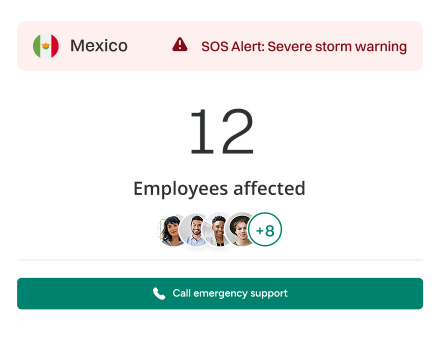
Get instant alerts when political unrest, natural disasters, or health crises emerge

24/7 SOS support
Multilingual support connects you instantly to doctors and emergency coordinators

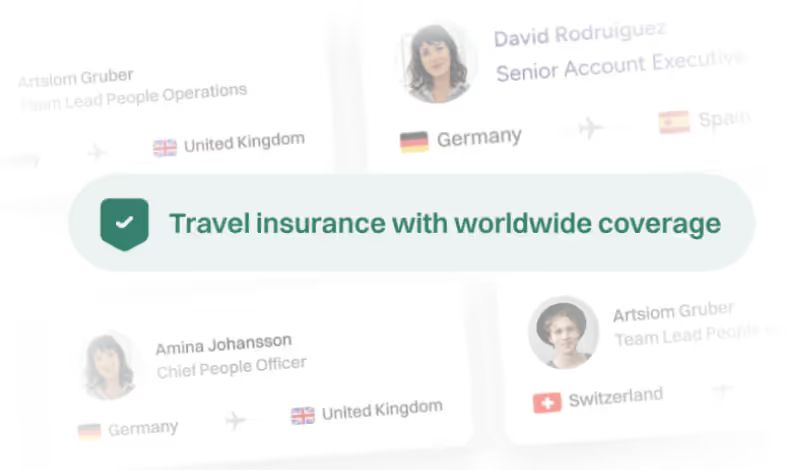
Travel health insurance
Medical coverage by ALH Group Hallesche added to every approved trip, worldwide


Repatriation management
Get step-by-step repatriation checklists covering tax obligations, immigration requirements, social security transitions, payroll changes, and residence registration, and more
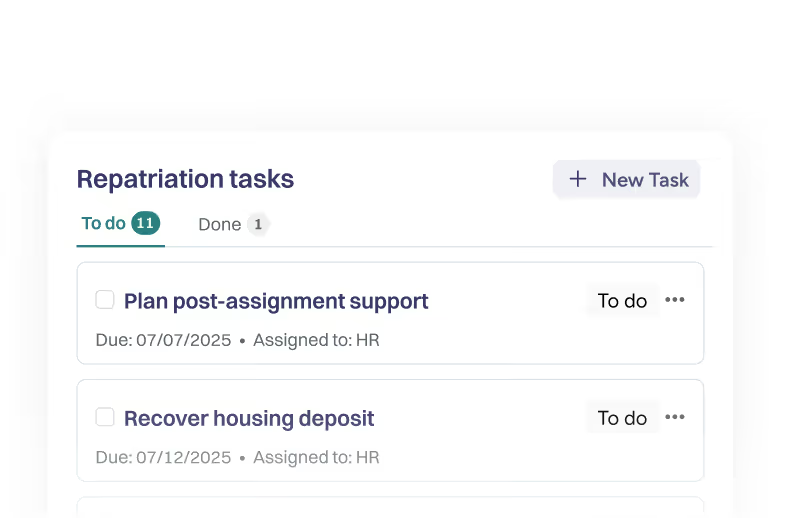
Vendor & Timeline coordination
Reduce your workload with WorkFlex as your single point of contact - we manage all vendors, deadlines, and documentation for seamless employee and family returns
Assignment compliance chat
Unlimited compliance questions for repatriation and ongoing obligations - get expert guidance on complex return processes and long-term tax requirements

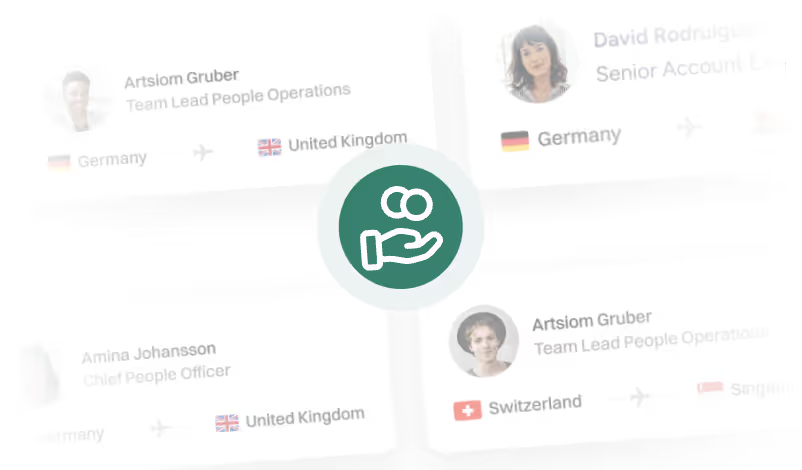
€250K financial liability coverage
We assume liability for social security, corporate and employment tax if risks emerge
Built to ISO 31030 standards
Risk assessment, threat detection, prevention strategies, real-time monitoring, and audit records


Trusted by global mobility leaders worldwide

"WorkFlex's assignment services give us great insights at a much lower cost than our previous provider. We love that they also handle visas, A1 certificates, and PWD notifications, services we used to manage ourselves. It's truly a one-stop solution for all our assignment needs."
Eliminate assignment complexity
Stop letting assignment compliance overwhelm your team. See how WorkFlex automates 50+ manual tasks into streamlined workflows that deliver compliance confidence in minutes
What you'll discover:





Automate global mobility compliance with our all-in-one software
Join hundreds of employers transforming their global mobility compliance processes with WorkFlex

- Certified Dutch tax lawyer
- 16+ of global mobility compliance experience
- Former Tax Director at PwC

- Certified lawyer (Volljuristin)
- 25+ years of global mobility compliance experience
- Trainer at the People Mobility Academy

- PhD in European Law
- 12+ years of legal experience

- 20+ years of global mobility experience
- Chapter Lead at the The Forum for Expatriate Management (Germany, Switzerland)

- 8+ years of global mobility compliance experience
- Expertise in international assignment compliance

- Expertise in international assignment compliance
- 2+ years of global mobility compliance experience

- Certified Spanish tax lawyer
- 6+ years of legal experience

- 14+ years in travel risk and crisis response
- Ex-military
- 30+ years in healthcare leadership
- Healthcare risk management specialist with experience in patient safety, quality management, medical outcome assessments

- 6+ years of specialized emergency medical training
- Master of Science in Medicine

- 16+ years in global security and crisis management
- Ex-military
